Climate impact at scale
India is the world's third-largest emitter. A domestic carbon price gives over 700 million tonnes of industrial CO₂e a market-based reason to fall — on top of voluntary action everywhere else.
Climate finance, explained
India is building its first nationwide carbon market — a system that puts a price on every tonne of carbon dioxide, and opens a new income stream for the farmers and communities we work with every day. Here's what it is, why it matters, and how it works.
The basics
A carbon credit is a tradeable certificate that represents one tonne of carbon dioxide equivalent (tCO₂e) that has been reduced, avoided, or removed from the atmosphere. Think of it as a receipt for a real, verified climate benefit — a tree planted and kept alive, a diesel pump swapped for solar, a field flooded less often to cut methane.
Once a project's climate benefit is measured and independently verified, it earns credits that can be sold. The buyer — a company, government body, or individual — uses that credit to offset emissions it hasn't yet been able to eliminate. In India's new domestic system these certificates are called Carbon Credit Certificates (CCCs), each equal to one tonne of CO₂e reduced or removed.

The concept, at a glance
Follow one tonne of carbon dioxide — from the moment it is avoided in a field to the moment a credit for it changes hands.
Industry, transport and energy release CO₂. Cutting every tonne instantly isn't possible — so some emissions need to be balanced out.
Planting trees, restoring soil, saving irrigation water or switching to clean energy reduces, removes or avoids a measurable amount of CO₂.
An accredited agency independently checks the result. One Carbon Credit Certificate is issued for every confirmed tonne of CO₂e.
Buyers purchase the certificate to offset emissions they can't yet cut — turning the project's climate work into real income.

Agroforestry, afforestation and healthy soils lock carbon away for decades — the most farmer-friendly route into the market.
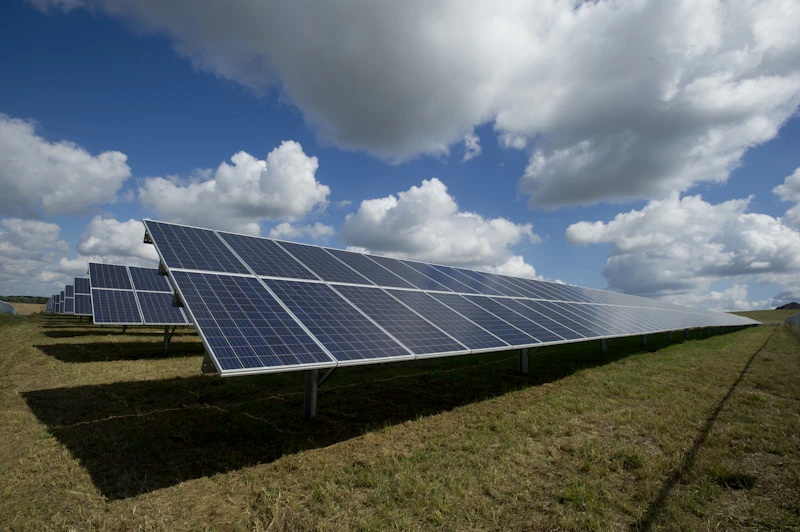
Solar, biogas and efficiency upgrades keep CO₂ out of the air in the first place — emissions avoided are credits earned.

Once verified, credits can be sold — a new revenue stream for the farmers, FPOs and communities we work with.
Why it matters
Carbon markets don't remove emissions by themselves — but they create a direct financial reason to cut them, and reward the people already doing the work.
India is the world's third-largest emitter. A domestic carbon price gives over 700 million tonnes of industrial CO₂e a market-based reason to fall — on top of voluntary action everywhere else.
Businesses, farmer groups, and project developers that cut emissions faster than their target can sell the surplus as credits — turning good practice into real income.
Unlike most compliance markets, India's offset mechanism is open to farmers, FPOs, and small businesses — not just large industry — through agroforestry, biochar, and sustainable-farming projects.
With the EU's Carbon Border Adjustment Mechanism (CBAM) taxing imports by their carbon footprint, a credible domestic carbon price helps Indian exporters avoid paying that tax twice.
Instead of a flat fine for polluting, the scheme lets efficient "leaders" sell certificates to lagging peers — funding the transition instead of just punishing it.
Agroforestry, water-saving irrigation, and afforestation projects that earn credits also rebuild soil health, biodiversity, and water tables — exactly where our own programs work.
How the Indian Carbon Market works
The Carbon Credit Trading Scheme (CCTS) — India's legal foundation for the Indian Carbon Market (ICM) — runs on two parallel tracks. Large industry is obligated to participate; everyone else can opt in voluntarily.
Covers large, energy-intensive industrial sectors that are assigned greenhouse-gas emission-intensity targets — tonnes of CO₂e per unit of product, not a hard emissions cap. It grew out of the existing Perform, Achieve and Trade (PAT) energy-efficiency scheme.
Open to any entity outside the compliance list — small businesses, farmers, forestry projects, and clean-energy developers. Eligible projects that reduce, remove, or avoid emissions can register and earn CCCs against approved methodologies.
Who runs it
National Steering Committee for the Indian Carbon Market — the highest authority overseeing the scheme, co-chaired by the Ministry of Power and the Ministry of Environment, Forest & Climate Change.
Bureau of Energy Efficiency — administers the scheme, sets sector methodologies, accredits verification agencies, and issues Carbon Credit Certificates.
Central Electricity Regulatory Commission — regulates trading and oversees India's power exchanges where CCCs change hands.
Operates the national registry where every obligated and voluntary entity must register before it can trade a single certificate.
Sectors in scope
Phase 1 of the compliance market covers nine energy-intensive industrial sectors. The offset mechanism casts a far wider net.
A second tranche is expected to add aviation, ports, railways, and data centres.
This is where farmer producer organisations, forestry projects, and rural enterprises can participate directly.
Roadmap
The Energy Conservation (Amendment) Act empowers the Central Government to specify a carbon trading scheme and issue Carbon Credit Certificates.
The Carbon Credit Trading Scheme is notified, establishing the NSCICM and defining the roles of BEE, MoEFCC, and CERC.
MoEFCC notifies emission-intensity targets across nine industrial sectors in two phases; BEE approves the first offset methodologies covering renewable energy, green hydrogen, biogas, and mangrove afforestation.
The Indian Carbon Market Portal launches for registration and monitoring; the first compliance-market trades and Carbon Credit Certificates are expected within the year.
Compliance cycles run annually, secondary trading matures, and further sectors — aviation, ports, railways, data centres — are expected to join.
Why this matters to us
This is where the Indian Carbon Market meets our own mission most directly. The Ministry of Agriculture & Farmers Welfare has built a dedicated voluntary-carbon framework for the agricultural sector, aimed squarely at small and marginal farmers.
Agroforestry, biochar, and water-saving techniques like alternate wetting and drying in paddy fields can all be registered as eligible carbon-reduction projects.
Agroforestry alone has been shown to add meaningful annual income per hectare once trees mature — on top of the harvest itself, not instead of it.
The same projects that earn credits also rebuild soil organic matter, protect water tables, and increase biodiversity — the co-benefits farmers feel every season.
Registration and verification costs are real, which is exactly why Farmer Producer Organisations and cooperatives that pool land and paperwork see the best outcomes.
Our own tree-plantation, sustainable agriculture, and community programs put us in a strong position to help local farmers understand and access this opportunity as it opens up.
See how to get involved →Common questions
Under the compliance mechanism, only obligated industrial entities trade CCCs to meet their targets. Under the voluntary offset mechanism, any registered entity — companies, NGOs, farmer groups, and even individuals — can generate or purchase credits.
Since official trading hasn't fully launched, prices aren't fixed yet. Analyst estimates for early compliance-market certificates range roughly from ₹250–1,500 per tonne, while voluntary-market credits from agriculture and forestry projects have historically traded around ₹1,200–2,500 per tonne — prices that will ultimately be set by market demand.
PAT tracked energy consumption and rewarded efficiency with Energy Savings Certificates. CCTS tracks actual greenhouse-gas emissions and rewards emission-intensity reduction with Carbon Credit Certificates — a broader, more climate-aligned successor that several PAT sectors are now transitioning into.
No. Credits are meant to complement direct emission cuts, not substitute for them — they price the emissions that are hardest to eliminate immediately, while rewarding the entities already reducing, avoiding, or removing carbon.
The Bureau of Energy Efficiency maintains the official Indian Carbon Market portal with notifications, methodologies, and registry details. We recommend checking it directly for the latest regulatory updates, as the scheme is still evolving.
Visit indiancarbonmarket.gov.in →